Gaussian splatting
Photoreal 3D scenes from ordinary photos and video that render in real time, even in a browser.
3DGS · radiance fieldsI’m Mathew Varkey, at Carnegie Mellon University. Core & Space is where I capture real structures as 3D data and turn them into digital twins.
A walkthrough of a 3D reality capture. Every surface you see was reconstructed from a scan, not modelled by hand.
I started out on construction sites and design desks. Now I spend my time scanning, reconstructing and connecting the built world. This is the work I keep coming back to, and I’d love to do it with you.
I fly drones, run LiDAR scans and shoot phone video of bridges, buildings and sites.
UAV · LiDAR · mobileI turn that footage into point clouds, meshes and Gaussian splats you can measure.
Point clouds · splats · meshesI link the geometry to drawings, materials and inspection records with knowledge graphs.
Digital thread · Neo4jI come back, capture again, and show what changed and what needs attention.
Change · conditionContractors, consultants and structural engineers. I speak your language, from RFIs and RA bills to span erection, and I can show you what scanning adds to a project you already know.
Labs, startups and researchers in 3D, AI and digital twins. I bring real structures, real site problems and an engineer’s eye for what accuracy actually matters.
Each tool is used for what it does best and checked against the others, so you know how much to trust the result.
Photoreal 3D scenes from ordinary photos and video that render in real time, even in a browser.
3DGS · radiance fieldsDrone surveys that produce orthomosaics, surface models and georeferenced point clouds.
GSD · GCPs · orthomosaicDense laser scans used as ground truth and for precise measurement of structural geometry.
Point density · registrationA digital thread that links each asset to its materials, history and inspections, with drift detection on top.
Neo4j · PythonTwo projects from Carnegie Mellon, shown at a research poster session and in a class presentation.
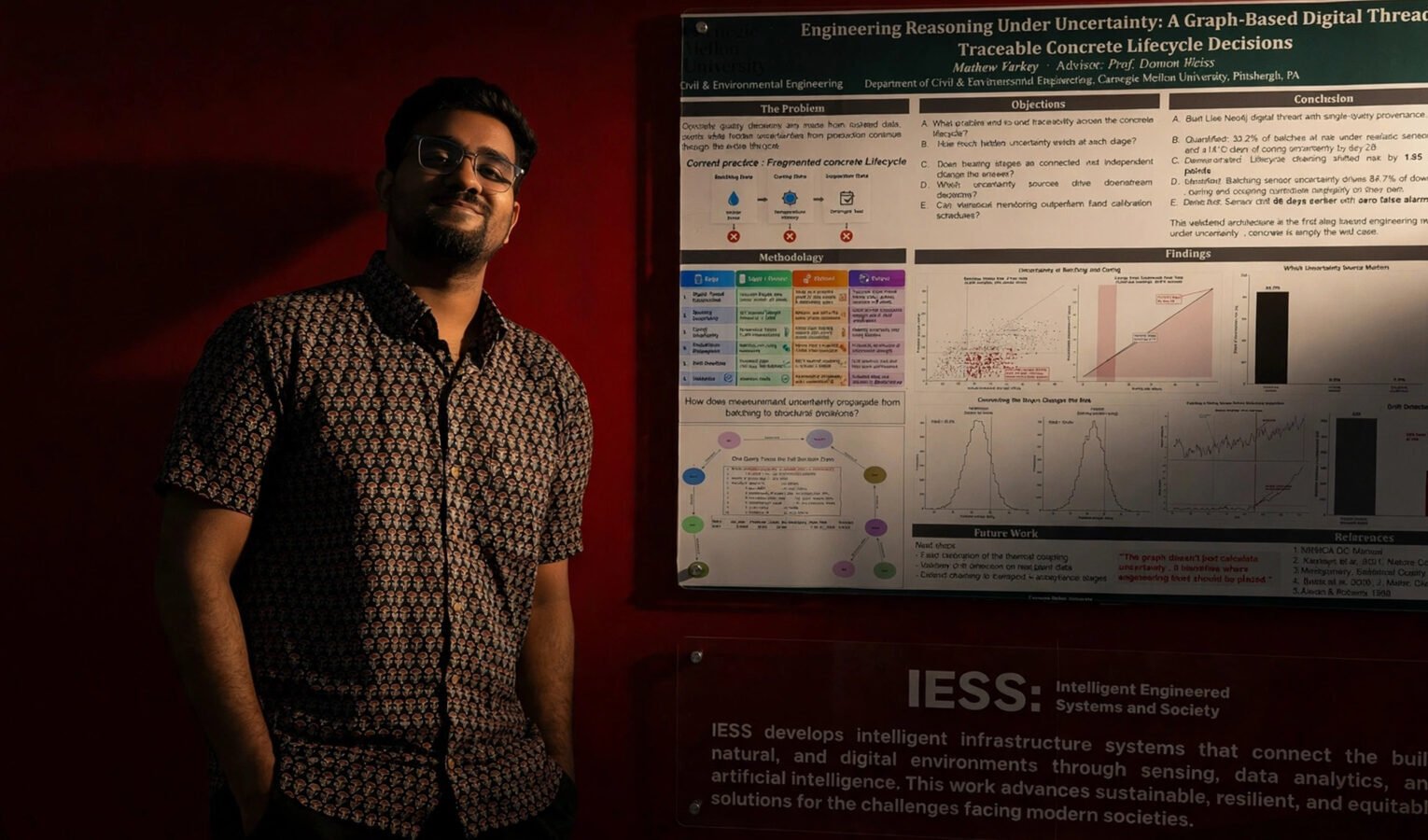
A graph-based digital thread that makes concrete life-cycle decisions traceable, from batching and curing to structural acceptance, and shows how measurement uncertainty carries through each stage.
Neo4j · drift detection · IESS, CMU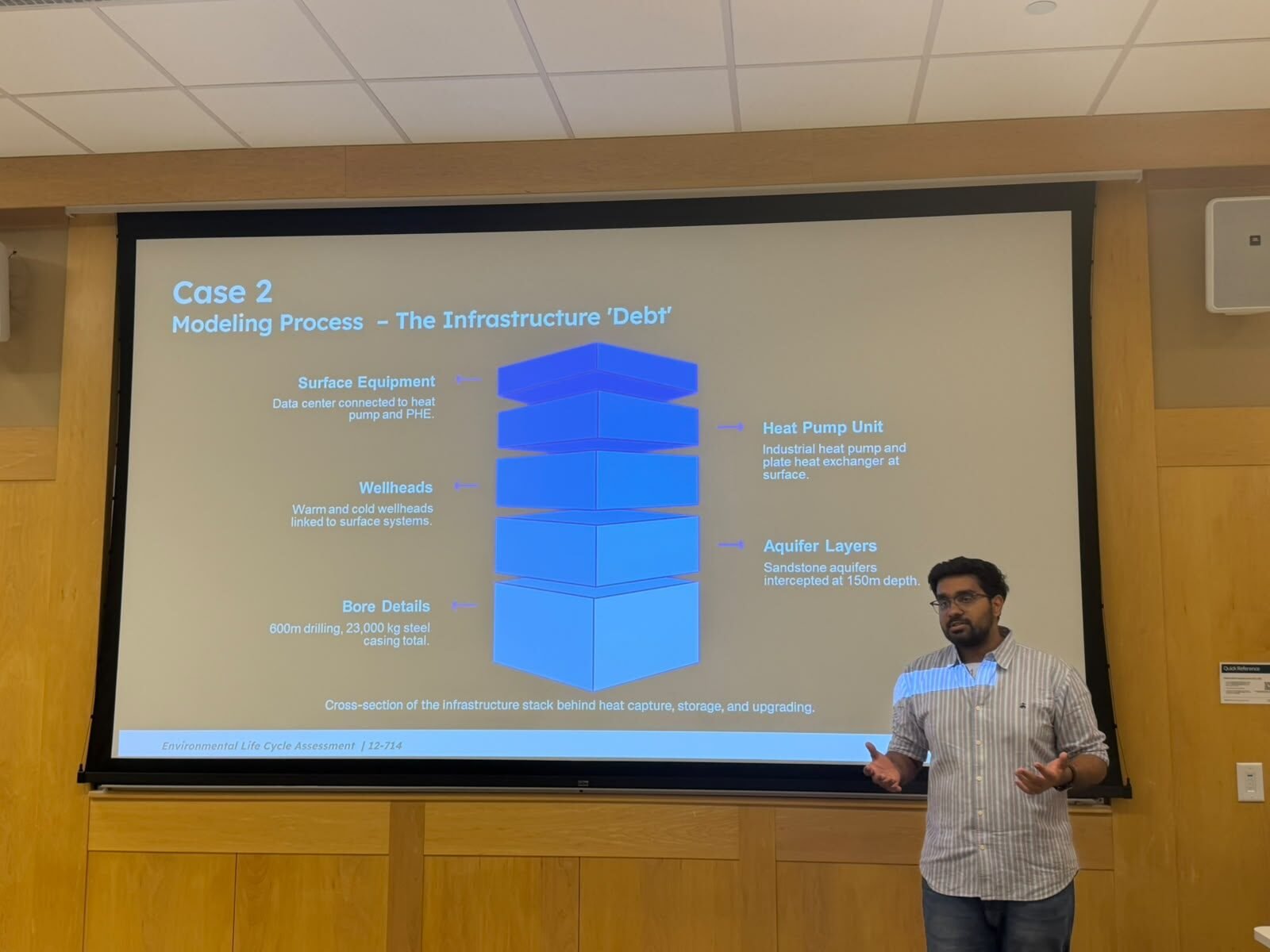
A life cycle assessment of data-centre waste heat, including the wells, heat pumps and steel behind geothermal heat storage.
OpenLCA · US LCI · 12-714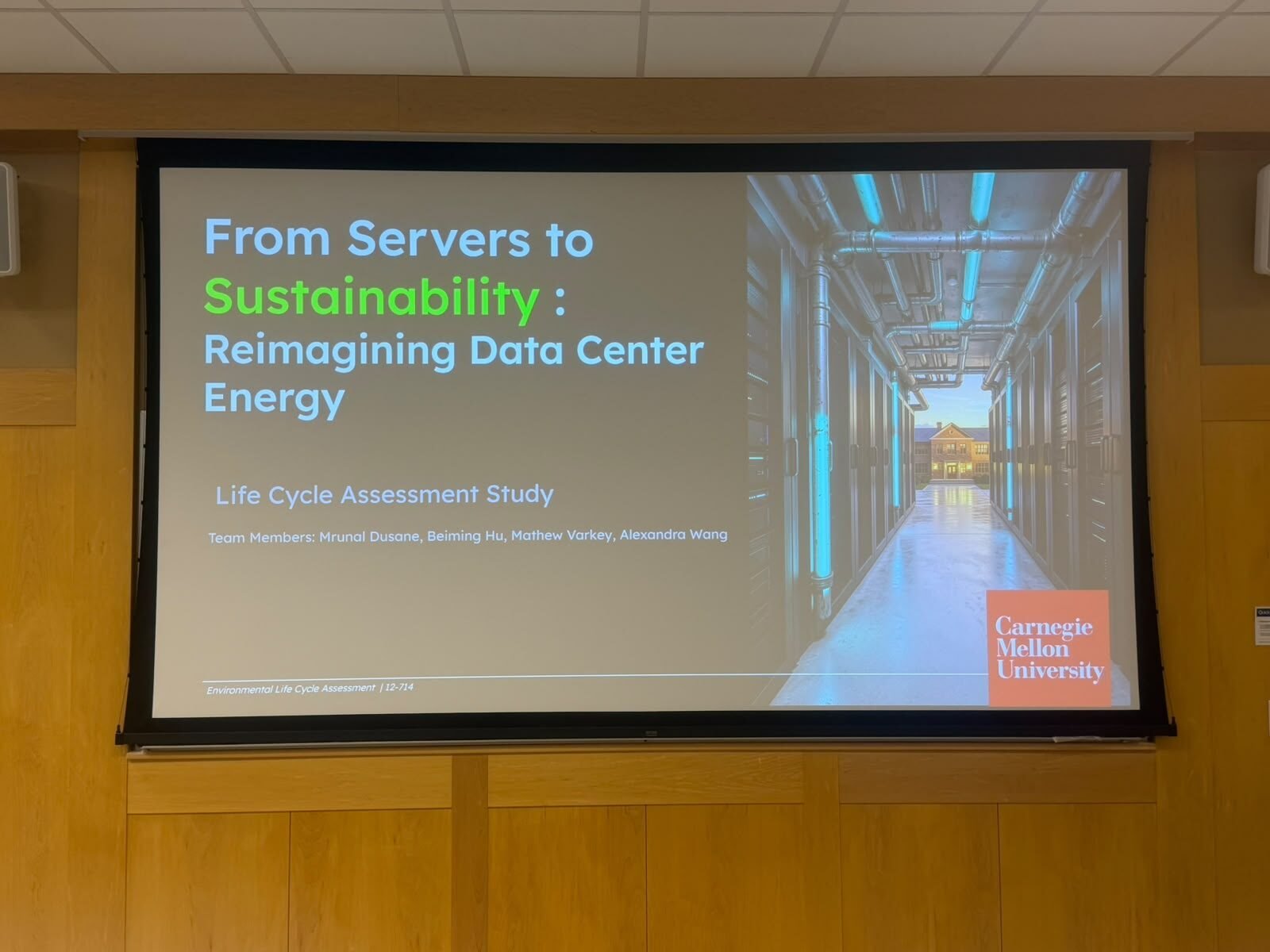
With Mrunal Dusane, Beiming Hu and Alexandra Wang, for Environmental Life Cycle Assessment.
Before the scanners, there were sites. I’ve worked on a bridge from tender to span erection, and designed concrete structures in the office. So when I scan your project, I know what I’m looking at.
I’ve helped plan and track a long bridge in Kerala, worked through tenders, and stood on site for QA/QC and span erection. At CMU I’m modelling how Pittsburgh’s bridges deteriorate.
I’ve designed and optimised reinforced concrete structures, including treatment plants, and cut concrete without cutting safety.
Schedules, RFIs, RA bills, progress reports. The everyday work that gets a structure built on time.
Turning inspection data into maintenance priorities that owners can act on.
Life cycle assessment and BIM workflows that measure a structure’s environmental cost.
Core & Space is open to research collaborations, pilot projects with labs and engineering teams, and conversations about digital twins for infrastructure.
mvarkey@andrew.cmu.edu
Email me